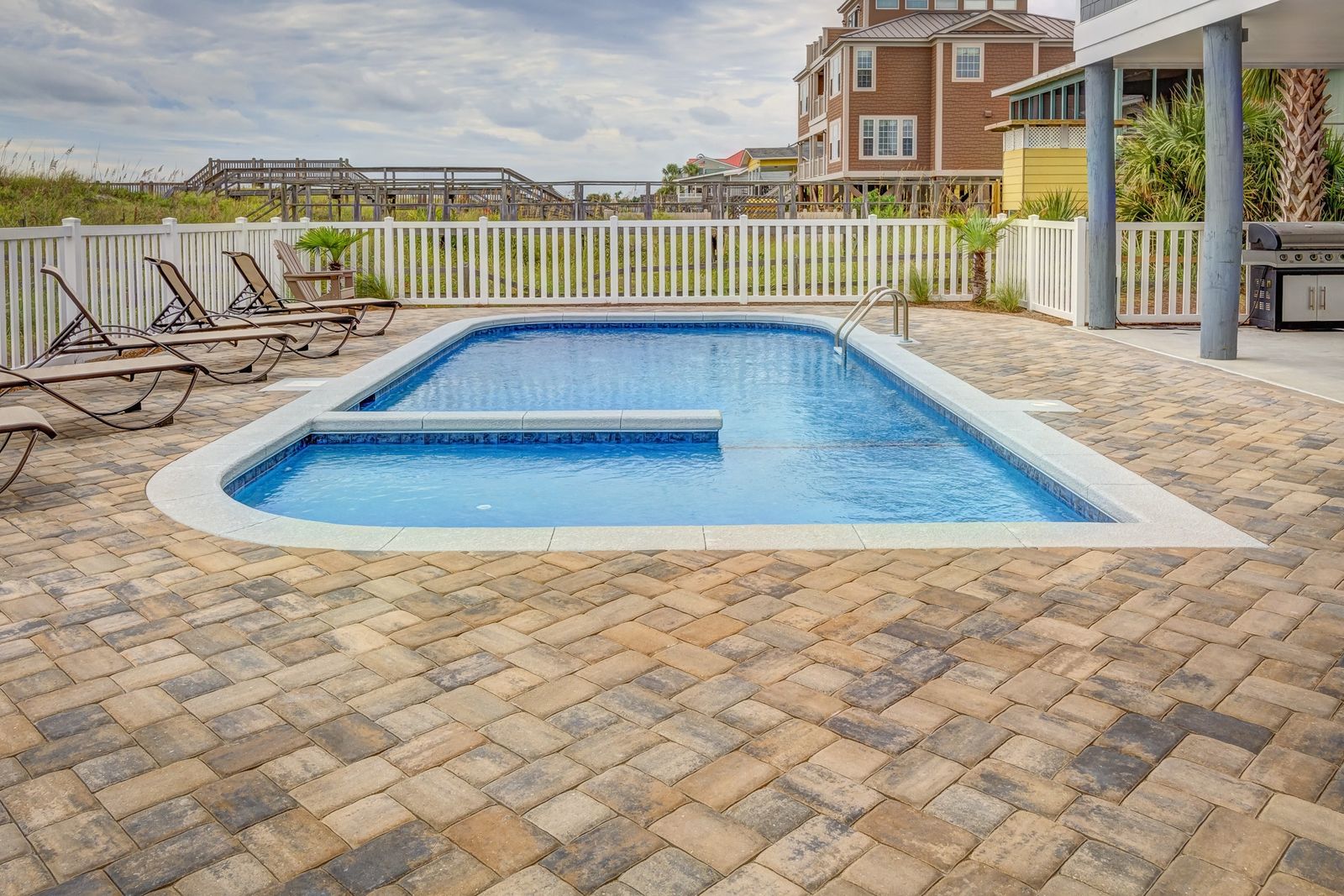
Quick answer: Pool barriers in Pearland are safety systems, and the City of Pearland lists the 2021 International Swimming Pool and Spa Code (ISPSC) among its adopted codes. Property-specific requirements — property type, barrier system, gates and inspections — must be verified against current City of Pearland sources before you select a product or layout. Call (281) 768-5900 for a free estimate and planning help.
Who sets pool-barrier rules for your property
The authority that applies to your pool depends on where the property sits. Inside the Pearland city limits, the City of Pearland’s building department administers permits and inspections, and the city’s code of ordinances governs construction. In unincorporated Brazoria or Fort Bend County, a different authority may hold jurisdiction, so the first step is always confirming which entity applies to your address. Your property type matters too — single-family homes, townhomes, multifamily buildings and commercial properties can fall under different rule sets.
Pearland’s adopted-code starting point
Pearland’s adopted codes list the 2021 International Swimming Pool and Spa Code among the standards the city references for pool construction and barriers. That code is the starting point for questions about barrier height, openings, gates and climb resistance, but it is not the only document that can apply. City ordinances, subdivision rules and recorded deed restrictions can add requirements, and the city can amend how a model code is applied locally. That is why we always recommend checking the current adopted-code page and the city’s code of ordinances before making a product decision. Our editorial standards page explains how we date and source these checks.
Permanent versus removable barrier systems
Pool barriers generally split into two families: permanent systems and removable isolation barriers.
| Consideration | Permanent barrier | Removable isolation barrier |
|---|---|---|
| Placement | Around the yard or pool area | Close around the pool itself |
| Installation | Posts set in concrete, fixed gates | Tensioned mesh panels, removable posts |
| Use case | Year-round enclosure, privacy, security | Temporary protection, renters, seasonal use |
| Gate and latch | Permanent hardware | Self-latching mesh gate included |
| Inspection | Part of the permanent structure | Must be re-verified after each install |
Permanent fencing is what most homeowners picture: a wood privacy fence, ornamental metal, chain-link or vinyl run with a properly configured gate. A removable barrier is a mesh system anchored with tensioned posts that comes down when the pool is no longer in use. Both can serve as pool barriers, but they answer different questions about permanence, appearance and cost. We help you plan permanent options like ornamental metal fencing and can walk you through the tradeoffs on your free estimate.
Mesh, ornamental metal and perimeter-fence distinctions
It helps to separate three things people often lump together. A mesh pool barrier is a removable isolation system. Ornamental metal fencing is a permanent perimeter or enclosure product — aluminum and steel picket systems that hold up well in Pearland humidity when the coating is maintained. A perimeter fence is the fence around your yard, which may or may not qualify as the pool barrier depending on height, openings and gates. The distinction matters because a fence that looks secure from the street can still fail a barrier review if openings are too wide or climb points are too easy.
Gate closing and latching considerations
Gates are where most barrier systems get into trouble. Pool barrier gates are generally required to close and latch automatically, with the latch positioned so a small child cannot reach it. That means the gate hardware has to do its job without help: hinges that return the gate to closed, a latch that catches every time, and no sag that leaves a gap at the bottom or sides. We see gates fail when hinges loosen, the gate frame twists, or the latch is mounted where it can be reached or bypassed. Those are the details a careful installation plans for up front.
Visibility, climb resistance and supervision
Barriers are one layer, not a substitute for watching. Climb resistance depends on how easy the design is to scale — horizontal rails, lattice and nearby objects can all become footholds. Visibility matters for the opposite reason: adults should be able to see the pool area clearly. The 2021 ISPSC and city requirements address these factors in detail, and no barrier replaces active supervision. Every guide we publish on this topic carries that same warning.
Permits and inspections: verifying your plan
Pearland requires a building permit for fence installations, and pool work carries its own permit and inspection path. The practical workflow we recommend:
- Confirm the authority having jurisdiction for your address.
- Read the current adopted-code and permit pages on the City of Pearland website.
- Check your HOA or deed restrictions for separate approval requirements.
- Verify property lines and easements before layout.
- Select a barrier system, then confirm it against the current requirements.
- Apply for the permit with the required drawings before installation.
We help homeowners work through this planning on a free estimate — call (281) 768-5900. For the full permitting picture, see our Pearland fence permit guide.
Maintenance and damage checks
A pool barrier only protects if it stays intact. Check gates weekly — does the latch catch every time, does the gate return to closed on its own? Inspect mesh tension, post bases, hinges and coatings after storms, and fix small problems before they become gaps. Corrosion on metal systems and loosening on wood or vinyl both deserve attention in Pearland’s humidity. Planned upkeep is cheaper than a failed inspection or a safety gap.
Official sources and update date
This guide is a planning resource, not a compliance certificate. Verify all requirements against primary sources before you build:
- City of Pearland — Community Development: permit requirements and adopted building codes
- Municode — City of Pearland Code of Ordinances
- 2021 International Swimming Pool and Spa Code (as adopted by Pearland)
Verified 2026-08-08. Check current City of Pearland sources, because fees, forms and adopted-code editions can change. No universal dimensions or compliance claim on this page replaces the current official text.
Frequently asked questions
Do I need a pool fence in Pearland?
If your property has a swimming pool, barrier requirements generally apply, and the City of Pearland lists the 2021 International Swimming Pool and Spa Code among its adopted codes. The exact requirements depend on your property type, barrier system and layout — verify them against current City of Pearland sources before you build.
What is the difference between a removable pool fence and a permanent fence?
A removable barrier is a temporary isolation system — typically mesh panels with tensioned posts — installed close around the pool. A permanent fence, like wood, vinyl, chain-link or metal, encloses the yard or pool area and stays in place. Each type has different installation, gate and inspection considerations.
Do pool fence gates need to be self-closing and self-latching?
Pool barrier gates are generally required to close and latch on their own, with the latch placed out of a small child’s reach. Verify the exact latching and placement rules in the current adopted code and city requirements for your property.
Does my existing yard fence count as a pool barrier?
Sometimes. A perimeter fence can serve as part of a pool barrier if it meets the applicable height, opening, climbing and gate requirements. A low decorative fence around the yard usually does not. Only an on-site review against current requirements can confirm.
Can Pearland Fence Pros help me plan a pool fence?
We help homeowners in Pearland verify current fencing requirements and plan permanent barrier options like ornamental metal and privacy fencing. Call (281) 768-5900 for a free estimate, and always confirm code details with current City of Pearland sources.
Not sure where to start on your property? Call (281) 768-5900 for a free estimate, or request one online.
Ready to start?
Call (281) 768-5900 for your free Pearland estimate, or request one online at /get-estimate/. We’ll help you verify requirements, compare permanent barrier options and review the cost factors before you commit to a layout.