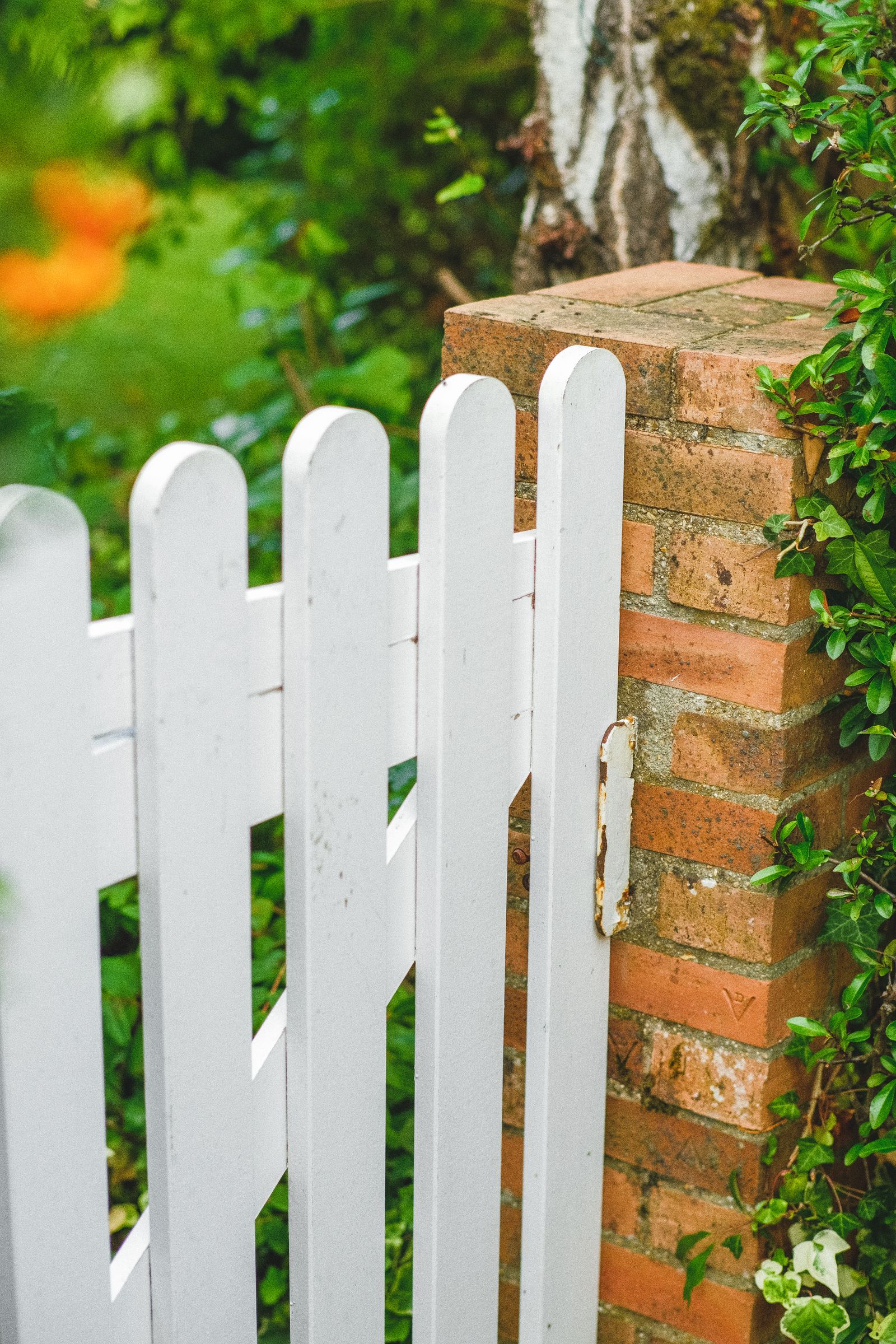
Quick answer: Isolated damage — a few pickets, one panel or a single failing post — can often justify repair when the rest of the fence is sound. Widespread post failure, spreading rot or corrosion, or repeated fixes to the same areas make replacement more practical after an on-site inspection. Call (281) 768-5900 for a free inspection and honest recommendation.
Quick decision checklist
- Only one or two damaged pickets, rails or panels → repair likely
- Several posts leaning or moving at the base → replacement or major post work
- Rot or corrosion spread across multiple sections → replacement likely
- Same areas failing again after repeated repairs → replacement likely
- Gate can’t stay aligned after hardware work → check the hinge posts first
- Fence no longer meets height, privacy or layout goals → consider replacement
No checklist replaces an on-site look — we verify everything in person.
Post and foundation condition
Posts are the foundation of the whole system, and they’re the first thing we check. Push gently on a post and watch the base: movement, cracked concrete, settled soil or a post that spins in its hole all point to foundation failure. In Pearland’s clay soil, drainage around post bases is a common culprit. One failed post can often be repaired or replaced in place. When several posts fail, the forces that damaged one have likely stressed its neighbors, and replacing the run usually costs less over time than a string of one-off fixes.
Panel, picket and rail damage
Cosmetic and impact damage to the above-ground structure is the most repairable category. A few broken pickets, a cracked rail or one storm-damaged panel can be replaced when the posts and remaining framework are sound. Matching the existing material is part of the job — we confirm availability and appearance limits before quoting. When panels are damaged along most of the run, or the framework behind them is failing, the economics shift toward replacement.
Call (281) 768-5900 for a free inspection, or request one online.
Rot, corrosion and material age
Rot in wood and corrosion in metal are the damage types that spread. Soft, spongy wood at grade, splitting near fasteners, or decay climbing the posts means the structural core is compromised. On metal, rust through the coating and pitting can weaken sections you can’t see until it’s advanced. We don’t use age alone as a replacement rule — a well-maintained old fence can outlast a poorly built new one — but when rot or corrosion is spread across the system, replacement is often the practical call. See our fence repair services for how we handle localized cases.
Gate and alignment problems
A gate that drags, won’t latch or has re-opened gaps is often a symptom, not the problem. First we check the hinge posts — if they’re moving, no amount of latch adjustment will hold. Distorted gate frames, missing stops and worn hardware can all be repaired when the structure behind them is sound. If the gate is twisting because the whole run is shifting, that’s a system problem. We fix the cause, not just the symptom.
Repeated repairs and lifecycle cost
Track your repair history honestly: if the same sections fail every storm season, or you’re patching different posts each year, you’re financing the fence twice. At some point the lifecycle cost of ongoing repairs exceeds replacement, and that point depends on how much of the system is failing. We give you both numbers — repair now, and replacement priced on the same scope — so you can see the crossover. Review the cost factors for what moves each number.
Partial versus full replacement
Replacement doesn’t always mean the whole property. A partial replacement — one failing run rebuilt to match the rest — can be a smart middle ground when the remaining sections are genuinely sound. Matching material, stain or coating between old and new sections is the main caveat, and we’re upfront about how visible the transition will be. When we install new fencing, the design is planned to last — see our fence installation process for how we build it.
What an inspection should document
A trustworthy inspection produces a document, not just an opinion. It should cover:
- Each affected run and the condition of its posts, rails and panels
- Post movement, foundation cracks and drainage issues
- Rot, corrosion and material age findings
- Gate condition and hinge-post stability
- What caused the damage, where water or impact is involved
- Repair scope and replacement scope, priced separately on equivalent terms
That’s exactly what we put in writing on every free inspection.
Frequently asked questions
Is it better to repair or replace a fence?
Isolated damage — a few pickets, one panel or a single failing post — can often be repaired when the rest of the system is sound. Widespread post failure, spreading rot or corrosion, or repeated repairs to the same areas usually make replacement more practical after an on-site inspection.
When should a fence be replaced instead of repaired?
Look for several failing posts, rot or corrosion spread across the system, gates that can’t be aligned, repeated fixes to the same sections, or a layout that no longer works for your property. We document what we find and give you both options priced side by side.
How do I know if my fence posts are failing?
Push gently on posts, check for movement at the base, look for cracks in the concrete or soil, and check for soft, spongy wood at grade. Multiple moving posts usually mean foundation work or replacement is needed. We verify this on site — we don’t diagnose remotely.
Can a leaning fence be repaired?
Sometimes. A localized failed post or connection can be repaired when the surrounding run is sound. If several posts have failed or the whole run is leaning, replacement is often more practical. We’ll tell you honestly after inspecting.
How much does it cost to repair a fence vs replace it?
Cost depends on damage extent, material, access, gates and site conditions, so a fair comparison prices the same scope both ways. We inspect, document and give you a written estimate with repair and replacement options side by side.
Ready to start?
Call (281) 768-5900 for your free Pearland inspection and estimate, or request one online at /get-estimate/. We’ll document what we find and show you repair and replacement priced on the same scope.