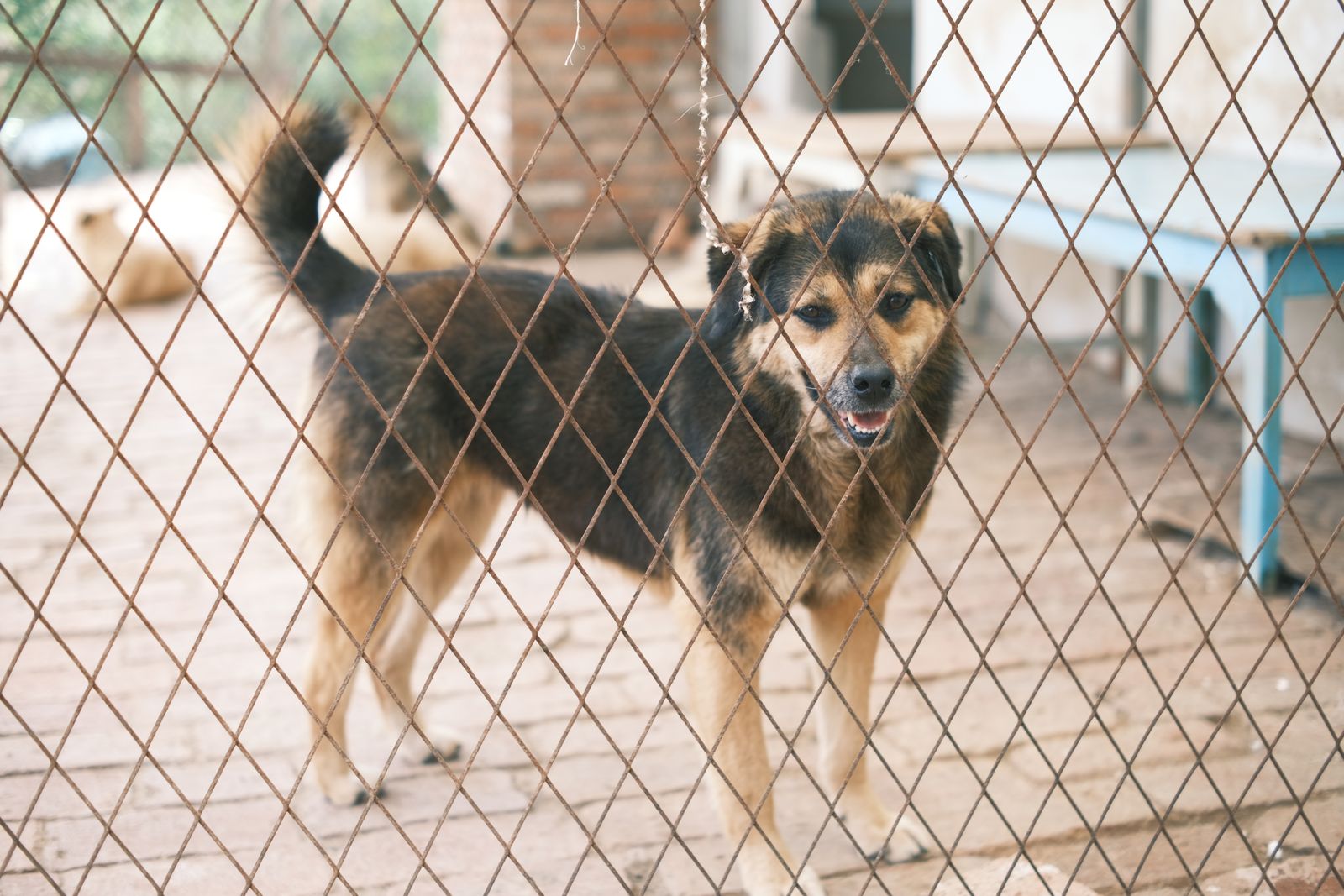
Quick answer: The safest fence for your dog depends on its size, jumping, climbing and digging behavior, gate security and supervision — not breed alone. We install wood, vinyl, chain-link and metal fences matched to the actual dog and yard, with gates and gaps specced for escape risk. Every project starts with a free on-site estimate and written scope. Call (281) 768-5900.
Start with the dog, not the breed
A breed label tells you little about how a particular dog treats a fence. A calm, low-energy dog is easier to contain than a determined escape artist of any size. Before we talk materials, we talk behavior: does the dog jump, climb, dig or chew near the fence line? How much time does it spend outside, and is anyone home to supervise? Honest answers to those questions drive everything else — height, spacing, gate hardware and material.
We also walk the yard the way the dog sees it. A planter, tree limb or utility box next to the fence can become a launch point. A slope can raise the grade on one side and shrink the effective height. Those details rarely show up in a picture of a fence; they show up on site, which is why we measure and inspect before we recommend anything.
Height and climbability
Height should match the dog’s jumping and climbing ability, not an arbitrary standard. Taller is not automatically better — a smooth wall that offers no toeholds can contain a good jumper better than a taller fence that gives it something to grip.
- Solid wood and vinyl panels give climbers little to hold onto.
- Chain-link mesh and open pickets can be climbed more easily, especially near posts, gates or anything a dog can brace against.
- Grade changes matter: where the yard slopes up to the fence, the effective height shrinks.
We measure the low spots, not just the high ones, and we check what sits next to the line. A dog that clears the gate latch is a gate problem, not a height problem — see the gates section below.
Bottom gaps and digging
The gap under the fence is the classic escape route. Dogs dig at fence lines for many reasons, and the practical question is how to close the gap without creating a maintenance headache.
Options we install and discuss:
- Bottom rails or kickboards that sit low to the ground and close the gap.
- Gravel or stone strips along the line, which many dogs dislike digging through.
- Buried mesh or deeper embedment where the soil and drainage allow.
- Concrete curbs or mow strips for high-traffic lines, which also make mowing easier.
The right answer depends on your soil, drainage and how the yard drains after a Houston rain. We don’t guess — the free estimate includes a look at the ground conditions.
Picket and mesh spacing
Whatever the material, spacing has to be tight enough that the dog can’t force its head or body through, and sturdy enough that pushing against it doesn’t bow the panel. Two fences of the same material can behave completely differently based on spacing and gauge.
- Wood pickets: spacing must be consistent and tight; a single over-wide gap can be the one the dog finds.
- Chain-link: mesh gauge and tension matter; sagging fabric creates gaps at the bottom.
- Metal pickets: spacing should be checked against the dog’s build, not just the look.
We verify spacing on the drawing and on the ground, because a fence that looks right from the driveway can still have a weak spot at the far corner.
Material options compared
| Material | Privacy | Climb risk | Dig defense | Typical fit |
|---|---|---|---|---|
| Wood | Full privacy available | Low on solid panels, toeholds if spaced | Kickboards and gravel work well | Classic look, repairable, flexible design |
| Vinyl | Solid, smooth panels | Low — few footholds | Reinforced posts, low rails | No staining schedule, Texas sun tested |
| Chain-link | Open sightlines | Moderate — mesh is grippy | Tensioned fabric, buried bottom | Visibility, straightforward containment |
| Metal | Open to semi | Low when spacing is tight | Posts set per spec | Durable, modern, more open |
Every material can contain a dog; the differences are in privacy, climb resistance, upkeep and how the system is put together. The posts, rails, tension and hardware behind the face of the fence are what actually hold up over time.
Still weighing options? Call (281) 768-5900 and we’ll talk through your dog’s habits and your yard before anything is quoted.
Gates: latches, self-closing and double-gate risk
Most containment failures happen at the gate, not the fence line. A latch a dog can operate, a gate left ajar, or a sagging gate with a gap underneath — any of these undoes the best fence.
- We install heavy-duty latches and gate hardware that dogs can’t work open.
- Self-closing or self-latching options remove the human-error factor.
- Double gates double the escape points; we check both for alignment, gaps and latch height.
- Gate frames, hinges and stops are part of the build, so gates stay square and tight.
A second gate also adds cost and a second maintenance point. If you don’t genuinely need vehicle access, one well-built walk gate often serves the yard better.
Visibility and reactivity
Chain-link lets your dog watch the street, the sidewalk and the neighbor’s yard. Some dogs love that; others fixate, bark and pace. A solid wood or vinyl privacy fence removes those visual triggers entirely, which is why many reactive dogs settle down behind one.
Neither choice is right or wrong — it depends on the individual dog and what it’s reacting to. We’ll ask how your dog behaves at the fence line and spec accordingly. And regardless of material, no fence replaces supervision or removes the need for a secure, working gate.
Inspection and maintenance
Once the fence is in, small problems are cheap to fix and big ones are not. We recommend a simple walk-around a few times a year:
- Check the bottom gap — dig marks, erosion or settling.
- Look for loose pickets, bowed panels or sagging mesh.
- Test every latch and hinge.
- Watch for rot at the base of wood posts and corrosion on metal hardware.
We build fences to be serviceable, and we stand behind the work we put in. If you’re seeing problems with an existing fence, we’ll inspect it and give you a straight answer on repair versus replacement.
Frequently asked questions
What is the best fence height for a dog?
There’s no universal height, because jumping and climbing ability varies from dog to dog. We match height, climb resistance and gate hardware to the actual dog’s behavior and your yard, and we put the full specification in your written estimate.
Can a dog dig under a fence?
Yes, digging under the bottom rail or gate is one of the most common escape routes. Bottom boards, kickboards, gravel or buried mesh can close the gap, depending on your soil and drainage. We review the options for your yard on the free estimate.
What fence material is hardest for a dog to climb?
Smooth, solid surfaces like vinyl panels and well-built solid wood give a climber little to grip, while open mesh and widely spaced pickets offer toeholds. Height and gate security still matter, and no fence replaces supervision.
Privacy fence or chain-link for a dog?
Chain-link keeps sightlines open, which some dogs enjoy but reactive dogs may find overstimulating. A wood or vinyl privacy fence removes visual triggers. We’ll talk through your dog’s behavior and pick the system that fits.
Do you install fences for dog containment in Pearland?
Yes. We install wood, vinyl, chain-link and metal systems and spec the gates, latches and gaps for your dog and yard. Call (281) 768-5900 for a free estimate.
Ready to start?
Call (281) 768-5900 for your free Pearland estimate, or request one online.
Implementation notes (do not publish)
- Gates: no containment guarantee anywhere in the copy; supervision caveat present in Quick answer, climbability FAQ and reactivity section. No veterinary or behavioral claims — behavior is described in practical fence terms only.
- Schema: Article + WebPage + BreadcrumbList + FAQPage; FAQPage mainEntity matches the 5 visible FAQ questions exactly (same wording).
- Internal links: contract targets only —
/privacy-fences/,/chain-link-fences/,/vinyl-fences/,/metal-fences/,/get-estimate/(conversion route). - Phone: (281) 768-5900 in quick answer, mid-page CTA (material table section) and closing CTA.
- Word count: body within the 900–1400 guide range.